Quick Answer: There are dozens of legitimate online business ideas that require no experience, no degree, and very little startup money. The best options for beginners in 2026 include freelance services, print-on-demand, affiliate marketing, dropshipping, and selling digital products. Most can be started within a week, and many generate income within the first 30 to 90 days with consistent effort.
Key Takeaways
- No experience is needed to start most online businesses — skills can be learned for free on YouTube, Coursera, or Google.
- Startup costs are low: Many ideas cost $0 to $100 to launch, making them accessible to almost anyone.
- Income varies widely: Part-time side hustles can earn $200–$2,000/month; full-time efforts can scale much higher over time.
- Freelancing is the fastest path to income because clients pay for your time, not your credentials.
- Print-on-demand and dropshipping are low-risk product businesses — no inventory required.
- Affiliate marketing and blogging take longer to earn but can generate passive income once established.
- Consistency matters more than talent in most of these businesses, especially in the first 90 days.
- Picking one idea and committing beats jumping between five options with no focus.
What Are Online Business Ideas That Require No Experience?
Online business ideas that require no experience are income-generating activities anyone can start online without a formal background, degree, or professional history. They rely on skills that can be self-taught, platforms that do the heavy lifting, or services that match your existing everyday knowledge.
These businesses work for stay-at-home parents, recent graduates, 9-to-5 workers looking for extra income, and anyone who wants financial flexibility without a large upfront investment.
Which Online Business Ideas Are Best for True Beginners?
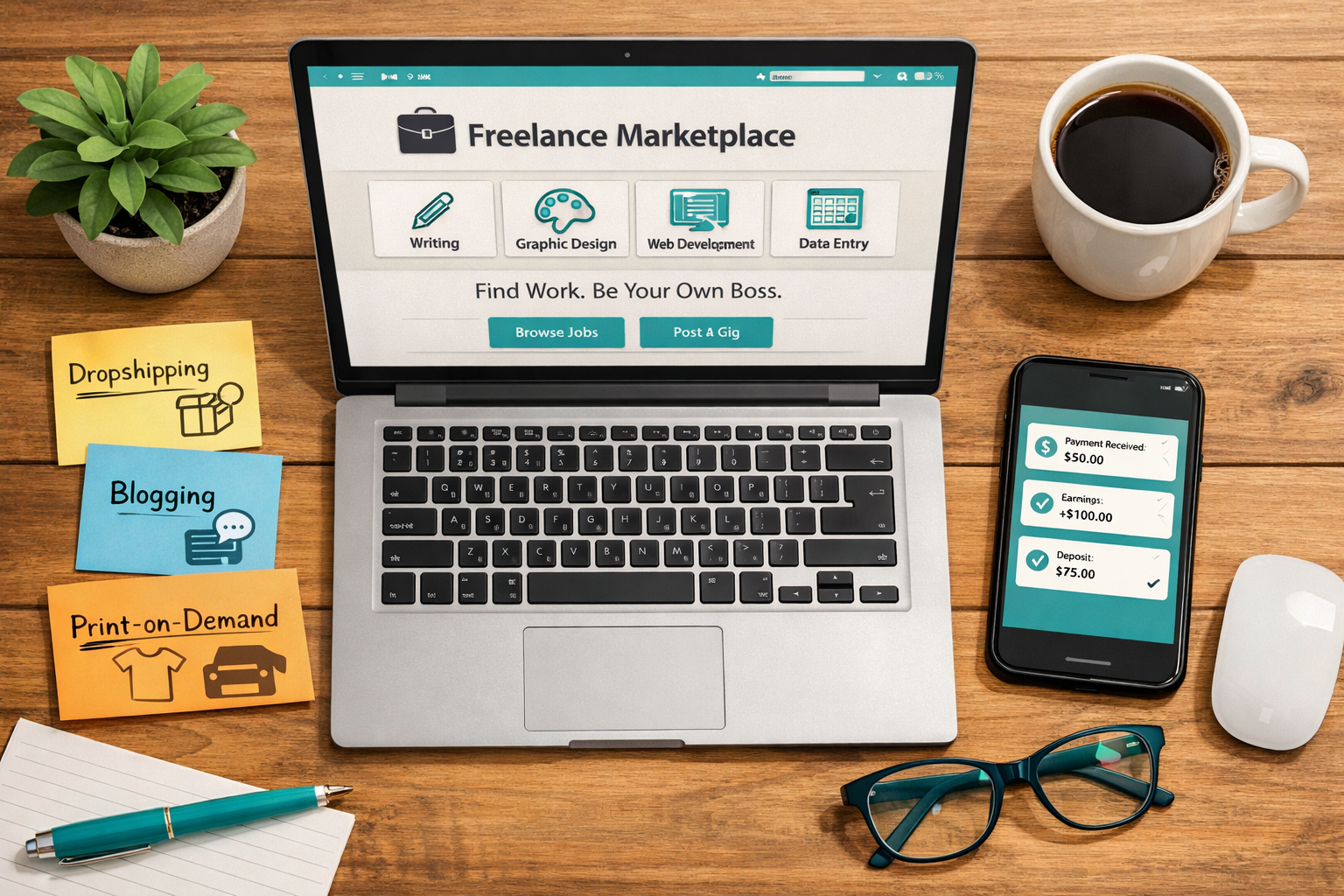
The best starting points are businesses with low barriers to entry, fast feedback loops, and free platforms to practice on. Here are the top options ranked by how quickly a beginner can realistically earn their first dollar:
| Business Type | Time to First Earnings | Startup Cost | Skill Level |
|---|---|---|---|
| Freelance Services | 1–4 weeks | $0 | Low–Medium |
| Print-on-Demand | 2–6 weeks | $0–$30 | Low |
| Virtual Assistant | 1–3 weeks | $0 | Low |
| Affiliate Marketing | 1–6 months | $0–$100 | Low–Medium |
| Dropshipping | 4–8 weeks | $50–$200 | Medium |
| Selling Digital Products | 2–8 weeks | $0–$50 | Low–Medium |
| Online Tutoring | 1–2 weeks | $0 | Low |
| Blogging/Content Creation | 3–12 months | $50–$100 | Low |
Choose freelancing or virtual assistant work if you need income fast. Choose affiliate marketing or blogging if you’re building for long-term passive income and can wait several months.
How Do You Start Freelancing With Zero Experience?
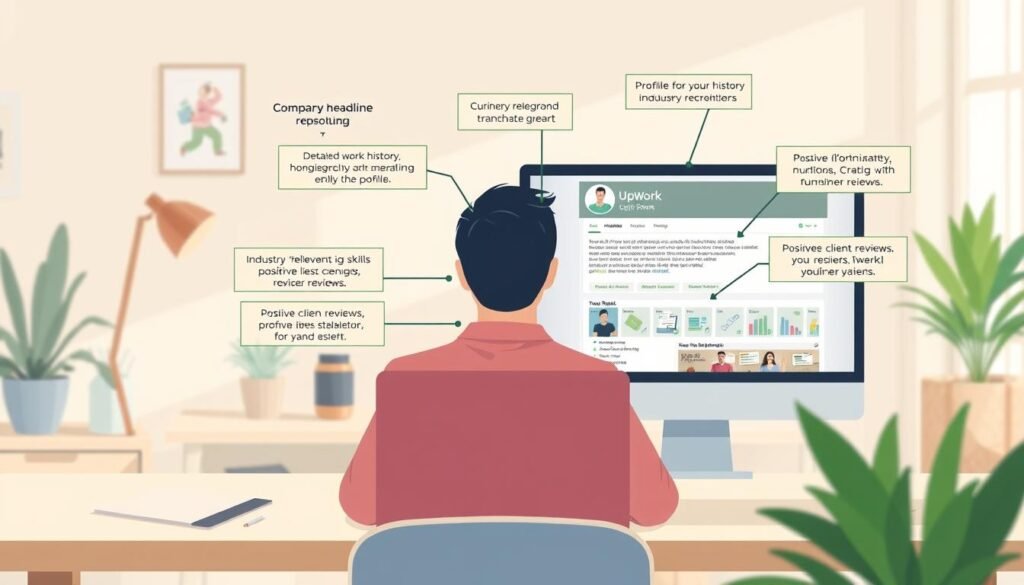
Freelancing is the most direct route to earning money online with no experience. Clients on platforms like Fiverr, Upwork, and Contra hire beginners every day for tasks like writing, graphic design, data entry, social media management, and video editing.
Step-by-step guide for beginners:
- Pick one service — choose something you already enjoy or can learn quickly (writing, Canva design, transcription, email management).
- Create a profile on Fiverr or Upwork — use a clear photo, write a simple bio, and list your service.
- Set a competitive starting price — charge slightly below market rate at first to attract reviews.
- Deliver excellent work on your first 3–5 jobs — early reviews are everything.
- Raise your rates once you have 5–10 positive reviews.
Common mistake: Beginners often create profiles on five platforms at once and get overwhelmed. Pick one platform, master it, then expand.
Realistic income: Beginner freelancers typically earn $300–$1,500/month in their first 90 days. Experienced freelancers on the same platforms earn $3,000–$10,000+/month.
What Is Print-on-Demand and Can Beginners Really Make Money?
Print-on-demand (POD) is a business model where you create designs for products like t-shirts, mugs, and phone cases, and a third-party supplier prints and ships them when a customer orders. You never touch inventory.
Platforms like Redbubble, Merch by Amazon, and Printful (connected to Etsy or Shopify) handle production and shipping automatically.
How to start:
- Open a free account on Redbubble or Merch by Amazon.
- Use free tools like Canva to create simple designs (quotes, minimalist graphics, niche-specific art).
- Upload designs to the platform with relevant titles and tags.
- Promote your shop on Pinterest or TikTok for free traffic.
Who this works for: People who enjoy simple graphic design or have a feel for trending niches (pets, hobbies, professions, pop culture).
Realistic income: Most beginners earn $50–$500/month in the first six months. Sellers with 100+ designs in strong niches can earn $1,000–$5,000/month over time.
Is Affiliate Marketing a Good Online Business Idea With No Experience?
Affiliate marketing is one of the most popular online business ideas that require no experience because there’s no product to create and no customer service to handle. You earn a commission by promoting other companies’ products through a blog, YouTube channel, or social media.
Amazon Associates, ShareASale, and Impact are beginner-friendly affiliate networks with thousands of products to promote.
Simple starting path:
- Choose a niche you’re genuinely interested in (fitness, personal finance, home decor, tech gadgets).
- Start a free blog on WordPress.com or a YouTube channel.
- Create helpful content that answers questions your audience is searching for.
- Add affiliate links naturally within that content.
- Earn a percentage (usually 2%–30%) of every sale made through your link.
Edge case: Affiliate marketing takes time. Most beginners don’t earn meaningful income until month 3–6. If you need money within 30 days, start with freelancing first and build affiliate content on the side.
What Is Dropshipping and How Does It Work for Beginners?
Dropshipping is a retail model where you sell products online without holding inventory. When a customer buys from your store, you purchase the item from a supplier who ships it directly to the customer.
Shopify and WooCommerce are the most common platforms. Suppliers are found through DSers (AliExpress), Spocket, or AutoDS.
Basic setup steps:
- Choose a niche (avoid overly saturated markets like generic phone cases).
- Set up a Shopify store (14-day free trial available).
- Connect a supplier app like DSers.
- Import 10–20 products with strong reviews.
- Run paid ads on Facebook or TikTok, or use organic content to drive traffic.
Startup cost estimate: $50–$200 for a domain, Shopify subscription, and initial ad testing.
Common mistake: Choosing products with no research. Use tools like Google Trends or TikTok’s Creative Center to validate demand before building a store.
Can You Make Money Selling Digital Products Online?
Yes, and digital products are one of the most scalable online business ideas that require no experience because you create something once and sell it repeatedly with no additional cost.
Examples of digital products beginners sell successfully:
- Canva templates (social media posts, resumes, planners)
- eBooks and guides (how-to content in any niche)
- Notion templates (productivity systems, budget trackers)
- Printable planners and worksheets
- Stock photos or graphics
Where to sell: Etsy, Gumroad, Payhip, and Creative Market are beginner-friendly platforms with built-in audiences.
Realistic income: A single well-designed Canva template pack on Etsy can earn $200–$2,000/month with good SEO and consistent uploading. Sellers with 20–50 products in a focused niche often see compounding sales growth.
How to Become a Virtual Assistant With No Experience
A virtual assistant (VA) provides remote administrative, creative, or technical support to businesses and entrepreneurs. No formal training is required — if you can manage email, schedule appointments, do research, or handle social media, you qualify.
Services beginners offer as VAs:
- Email inbox management
- Calendar scheduling
- Data entry and spreadsheet work
- Social media posting and engagement
- Customer service replies
- Research and report writing
Where to find clients: Facebook groups for entrepreneurs, LinkedIn, Belay, Time Etc, and Upwork all have active VA job listings.
Starting rate: $15–$25/hour for beginners. Experienced VAs with specialized skills (bookkeeping, podcast editing, copywriting) charge $40–$75/hour.
What Are the Fastest Ways to Start Earning Online With No Experience?
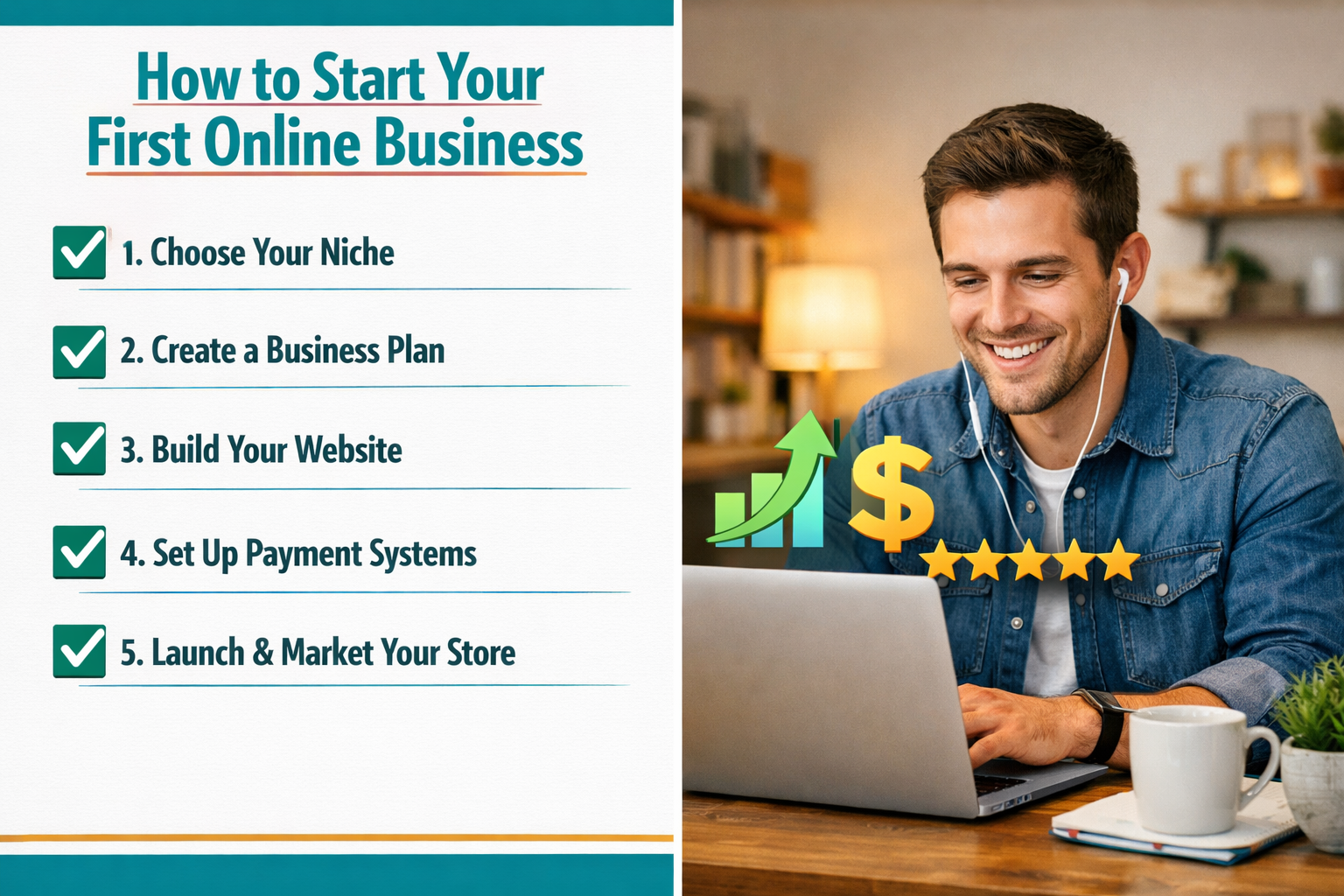
The fastest online business ideas that require no experience are those where you trade time or skills for money directly, rather than building an audience or waiting for passive income to grow.
Top three fastest options:
- Freelance writing or data entry — post a Fiverr gig today, receive your first order within days.
- Virtual assistant work — join two or three Facebook groups for business owners and post your services.
- Online tutoring — sign up on Preply or Wyzant and start accepting students within a week.
Practical tip: Combine a fast-income method (freelancing) with a slower-growing passive income stream (affiliate marketing or digital products). This keeps cash flowing while you build something scalable.
FAQ: Online Business Ideas That Require No Experience
Q: Do I need money to start an online business with no experience?
Most of the best beginner online businesses cost $0 to start. Freelancing, affiliate marketing, and print-on-demand on Redbubble all have free entry points. Dropshipping and a self-hosted blog may cost $50–$200 to set up properly.
Q: How long does it take to make money online as a beginner?
Freelancing and virtual assistant work can generate income within 1–4 weeks. Affiliate marketing and blogging typically take 3–12 months. Print-on-demand usually sees first sales within 2–6 weeks with active promotion.
Q: Is it realistic to make $1,000/month online with no experience?
Yes, but it takes consistent effort. Most beginners reach $1,000/month within 3–6 months of focused work on freelancing or virtual assistant services. Passive income methods like affiliate marketing take longer.
Q: What online business is easiest to start today?
Freelancing on Fiverr is the easiest to start today. Create a free account, set up a gig for a simple service (writing, data entry, Canva design), and you can receive orders within 24–72 hours.
Q: Can I run an online business while working a full-time job?
Yes. Most beginners start part-time, working 5–15 hours per week. Freelancing, digital products, and affiliate marketing are all flexible enough to build alongside a regular job.
Q: Do I need a business license to start an online business?
Requirements vary by country and state. In the United States, most solo online businesses operate as sole proprietorships with no formal registration required until income grows. Consult a local accountant or legal resource once you start earning consistently.
Q: What skills are most in demand for online freelancers in 2026?
Copywriting, short-form video editing, AI prompt engineering, social media management, and web design are among the most requested freelance skills in 2026, based on platform trend data from Fiverr and Upwork.
Q: Is dropshipping still worth it in 2026?
Dropshipping remains viable in 2026, but competition is higher than it was five years ago. Success depends on choosing a specific niche, building a branded store, and using creative content marketing rather than generic ads.
Q: How do I avoid online business scams?
Avoid any “opportunity” that requires you to pay a large upfront fee, promises guaranteed income, or asks you to recruit others to earn. Legitimate platforms like Fiverr, Etsy, Amazon, and Upwork are free to join and transparent about how earnings work.
Q: What is the biggest mistake beginners make when starting an online business?
Trying too many ideas at once. Beginners who pick one business model, commit to it for 90 days, and learn from their results consistently outperform those who switch methods every few weeks.
Conclusion: Your Next Steps Start Today
There’s no shortage of online business ideas that require no experience — the challenge is choosing one and starting. The options covered here (freelancing, print-on-demand, affiliate marketing, dropshipping, digital products, and virtual assistant work) are all proven, beginner-accessible, and scalable with time.
Actionable next steps:
- Choose one idea from this guide that matches your schedule and interests.
- Spend one week learning the basics through free YouTube tutorials or platform help centers.
- Set up your profile or store and publish your first offer, product, or piece of content.
- Commit to 90 days of consistent effort before evaluating results or switching strategies.
- Reinvest early earnings into tools, ads, or education to accelerate growth.
The best online business is the one you actually start. Pick your path, take the first step today, and adjust as you learn.