Every day, thousands of people earn money online by simply recommending products they love — without ever creating their own product, managing inventory, or handling customer service. This is affiliate marketing, and in 2026, it remains one of the most accessible ways to build an income stream from scratch. Whether you’re a complete newcomer or a side hustler looking for a reliable method, learning how to start affiliate marketing for beginners is one of the smartest moves you can make this year.
Key Takeaways 📌
- Affiliate marketing is a performance-based model where you earn a commission for driving sales or leads to a brand.
- Anyone can start with zero upfront investment by using free platforms and affiliate programs.
- Choosing the right niche is the single most important decision you’ll make as a beginner.
- Success depends on creating helpful content that earns trust — not just spamming links.
- Realistic earnings range from $100/month for beginners to $10,000+/month for experienced marketers.
What Is Affiliate Marketing and Why It Works
Affiliate marketing is a simple business model. A company pays you a commission every time someone buys a product or signs up for a service through your unique referral link.
Here’s the basic flow:
- You join an affiliate program (free to do).
- You get a unique link to share.
- Someone clicks your link and makes a purchase.
- You earn a commission — typically 5% to 50% of the sale.
💡 “Affiliate marketing is essentially getting paid to make introductions. The better the introduction, the more you earn.”
Why It’s Perfect for Beginners
- Low barrier to entry — no product creation required
- Flexible schedule — work from anywhere, anytime
- Scalable income — one piece of content can earn money for years
- No customer service — the brand handles everything after the sale
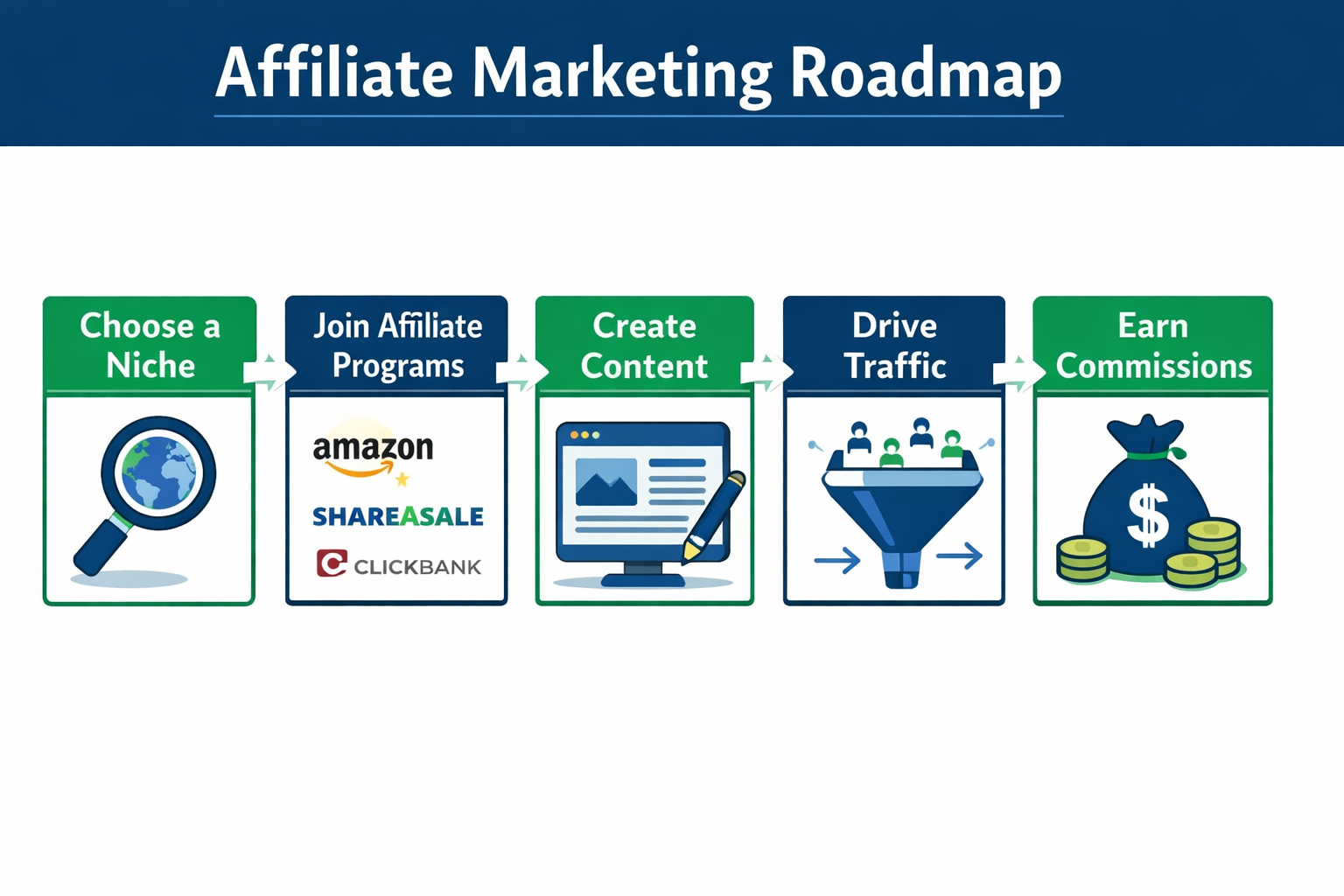
How to Start Affiliate Marketing for Beginners: Step-by-Step
This is the core of what every beginner needs to know. Follow these steps in order and you’ll have a solid foundation.
Step 1: Choose a Profitable Niche 🎯
A niche is simply a focused topic area. Picking the right one is critical.
Good niche criteria:
- You have some interest or knowledge in the topic
- People actively spend money in this space
- There are affiliate programs available
Top beginner-friendly niches in 2026:
| Niche | Avg. Commission | Example Products |
|---|---|---|
| Personal Finance | 10–40% | Budget apps, credit cards |
| Health & Fitness | 10–30% | Supplements, workout gear |
| Tech & Software | 20–50% | SaaS tools, hosting plans |
| Home & Garden | 5–15% | Amazon products, tools |
| Online Education | 20–45% | Courses, e-books |
Pro tip: Don’t chase the most popular niche — chase the one where you can create genuinely useful content.
Step 2: Choose the Right Affiliate Programs
Once you have a niche, find programs that match it. Here are the most beginner-friendly options:
Top affiliate networks for beginners:
- 🛒 Amazon Associates — Easy to join, millions of products, 1–10% commission
- 💼 ShareASale — Thousands of brands, reliable payments
- 🖥️ ClickBank — Digital products, high commissions (up to 75%)
- 🌐 CJ Affiliate (Commission Junction) — Big brand partnerships
- 🧰 Impact — Modern platform, growing brand list
What to look for in a program:
- Commission rate (higher is better, but not the only factor)
- Cookie duration (30+ days is ideal)
- Payment reliability and minimum payout threshold
- Quality of the product itself
Step 3: Build Your Platform
You need a place to share your affiliate links. The most common options:
Option A: Start a Blog or Website ✍️
- Best for long-term, passive income
- Tools: WordPress + a hosting plan (Bluehost, SiteGround)
- Cost: ~$3–10/month for hosting
Option B: YouTube Channel 🎥
- Great for product reviews and tutorials
- Free to start
- Affiliate links go in the video description
Option C: Social Media 📱
- Instagram, TikTok, Pinterest, or X (Twitter)
- Best for building an audience quickly
- Works well paired with a blog or email list
Option D: Email Newsletter 📧
- Highly effective for conversions
- Tools: Mailchimp (free tier), ConvertKit, Beehiiv
🔑 Recommendation for beginners: Start with a blog + one social media channel. This combination builds long-term traffic and short-term visibility.
Step 4: Create Helpful Content
Content is the engine of affiliate marketing. The goal is to help people solve a problem — and recommend a product as part of the solution.
Best content types for affiliate marketing:
- Product reviews — “Is [Product X] Worth It in 2026?”
- Comparison posts — “[Product A] vs [Product B]: Which Is Better?”
- How-to guides — “How to Start a Podcast (Tools You’ll Need)”
- Best-of lists — “10 Best Budget Laptops for Students”
- Tutorial videos — Walk through using a product step by step
Content quality checklist:
- ✅ Answers a specific question
- ✅ Includes your honest opinion
- ✅ Clearly discloses affiliate links (legally required)
- ✅ Provides real value before asking for a click
Step 5: Drive Traffic to Your Content
Even the best content earns nothing without visitors. Here are the main traffic sources:
Free traffic methods:
- SEO (Search Engine Optimization) — Optimize content to rank on Google
- Pinterest — Drives huge traffic to blog posts
- TikTok/Instagram Reels — Short videos that go viral
- YouTube SEO — Optimize video titles and descriptions
Paid traffic methods (for later):
- Google Ads
- Facebook/Instagram Ads
- Sponsored posts
⚠️ Beginners should focus on free traffic first. Paid ads require budget and experience to be profitable.
Step 6: Track, Optimize, and Scale 📊
Once you have content and traffic, track what’s working.
Key metrics to monitor:
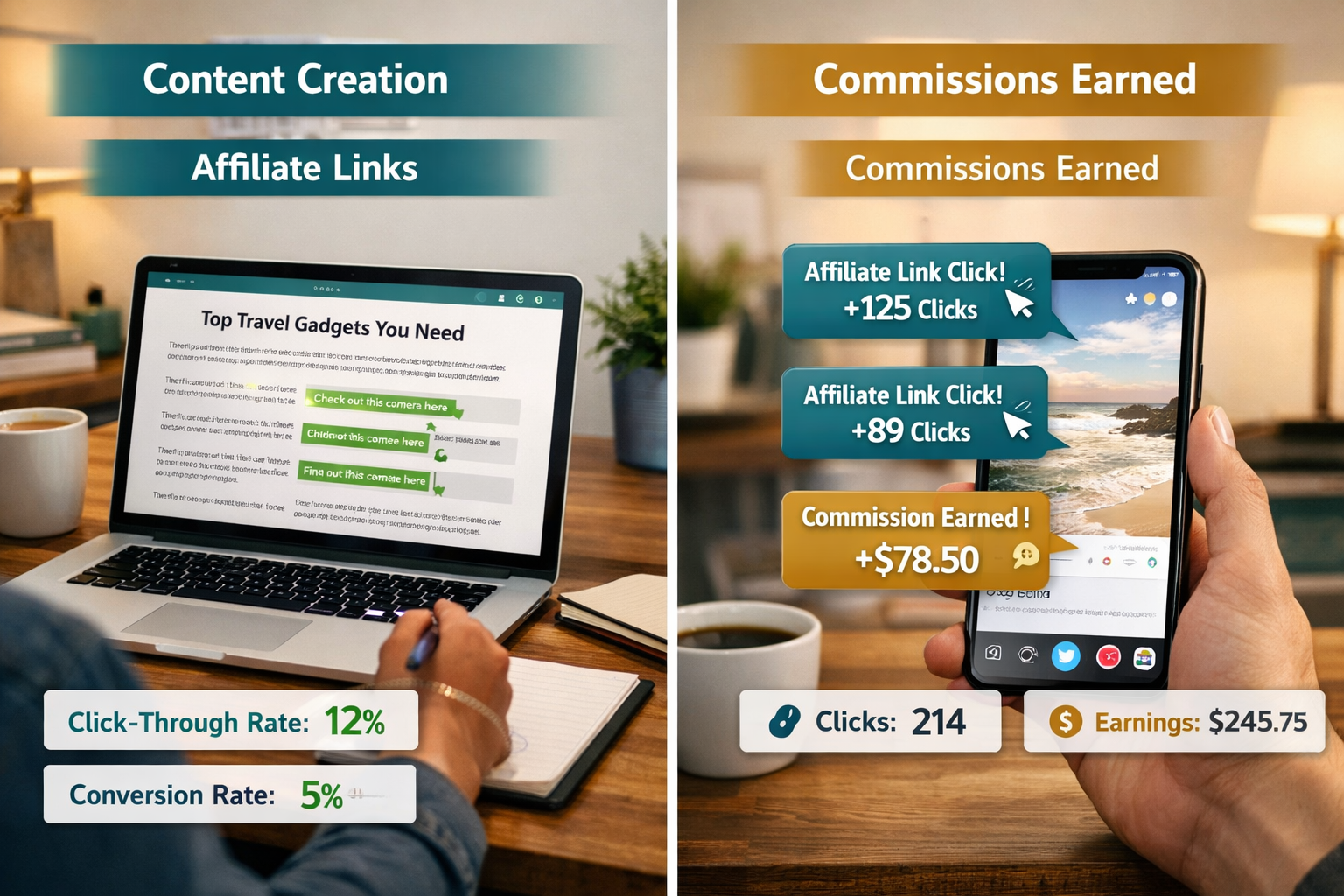
- Click-through rate (CTR) on your affiliate links
- Conversion rate (how many clicks become sales)
- Earnings per click (EPC)
- Top-performing content pieces
Use tools like Google Analytics, Pretty Links (for link tracking), and your affiliate dashboard to see the data.
When you find what works — double down on it. Create more content in that format, target similar keywords, and expand your reach.
Realistic Earning Expectations for Beginners
One of the biggest mistakes beginners make is expecting fast money. Here’s an honest breakdown:
| Timeline | Realistic Earnings |
|---|---|
| Month 1–3 | $0–$100 (learning phase) |
| Month 4–6 | $100–$500/month |
| Month 7–12 | $500–$2,000/month |
| Year 2+ | $2,000–$10,000+/month |
Factors that speed up growth:
- Publishing content consistently (3–5 posts/week)
- Targeting low-competition keywords
- Building an email list early
- Choosing high-commission programs
Factors that slow growth:
- Inconsistency
- Choosing a niche with no buyer intent
- Ignoring SEO basics
- Not disclosing affiliate relationships (legal risk)
Common Mistakes Beginners Make (And How to Avoid Them)
Learning how to start affiliate marketing for beginners also means learning what NOT to do.
❌ Promoting too many products at once — Focus on 2–3 products per niche at first.
❌ Skipping the disclosure — The FTC requires you to disclose affiliate relationships. Always add a disclaimer.
❌ Choosing a niche with no buyers — Passion alone isn’t enough. The niche needs people willing to spend money.
❌ Giving up too early — Most affiliates quit before month 6. The income curve is slow at first, then accelerates.
❌ Ignoring SEO — Without search traffic, your content won’t be found. Learn basic keyword research from day one.
Best Free Tools to Get Started in 2026 🛠️
| Tool | Purpose | Cost |
|---|---|---|
| Google Search Console | Track search rankings | Free |
| Ubersuggest / Ahrefs Free | Keyword research | Free/Paid |
| Canva | Create graphics for content | Free tier |
| WordPress.com | Start a blog | Free tier |
| Mailchimp | Email list building | Free up to 500 contacts |
| Pretty Links (WP plugin) | Manage affiliate links | Free tier |
| Google Analytics | Track website traffic | Free |
How to Start Affiliate Marketing for Beginners: Quick-Start Checklist
Use this checklist to launch your affiliate marketing journey:
- Pick a niche you can create content about consistently
- Research and join 1–2 affiliate programs
- Set up a blog, YouTube channel, or social media page
- Create your first 5 pieces of helpful content
- Add affiliate links with proper disclosure
- Set up Google Analytics to track traffic
- Build a simple email opt-in to capture leads
- Publish consistently for at least 90 days before evaluating results
Conclusion: Your Next Steps Start Today
Affiliate marketing is not a get-rich-quick scheme — but it is a legitimate, scalable income stream that thousands of people build every year. The barrier to entry is low, the upside is high, and the skills you learn are valuable for life.
Here’s what to do right now:
- Pick your niche — spend 30 minutes researching what you’re interested in and what people buy.
- Join one affiliate program — Amazon Associates is the easiest starting point.
- Create your first piece of content — a product review or how-to guide.
- Publish and repeat — consistency is the only “secret” in this business.
The best time to start was yesterday. The second best time is right now. 🚀