Imagine earning hundreds — or even thousands — of dollars every month from YouTube, all without ever appearing on camera. No makeup, no lighting setups for your face, no worrying about how you look. This is not a fantasy. Millions of creators are already doing it, and in 2026, the opportunity has never been bigger. Whether you are a shy introvert, a busy parent, or simply someone who values privacy, learning how to make money on YouTube without showing your face is one of the most powerful online income strategies available today.
Key Takeaways 🎯
- Faceless YouTube channels are a proven, scalable way to earn passive income online.
- Popular niches include finance, meditation, gaming, tutorials, and compilations.
- Multiple revenue streams — ads, affiliate marketing, sponsorships, and digital products — can be combined.
- Free and low-cost tools make it easier than ever to create professional-looking faceless content.
- Consistency and niche focus are the two biggest factors in long-term success.
What Is a Faceless YouTube Channel?
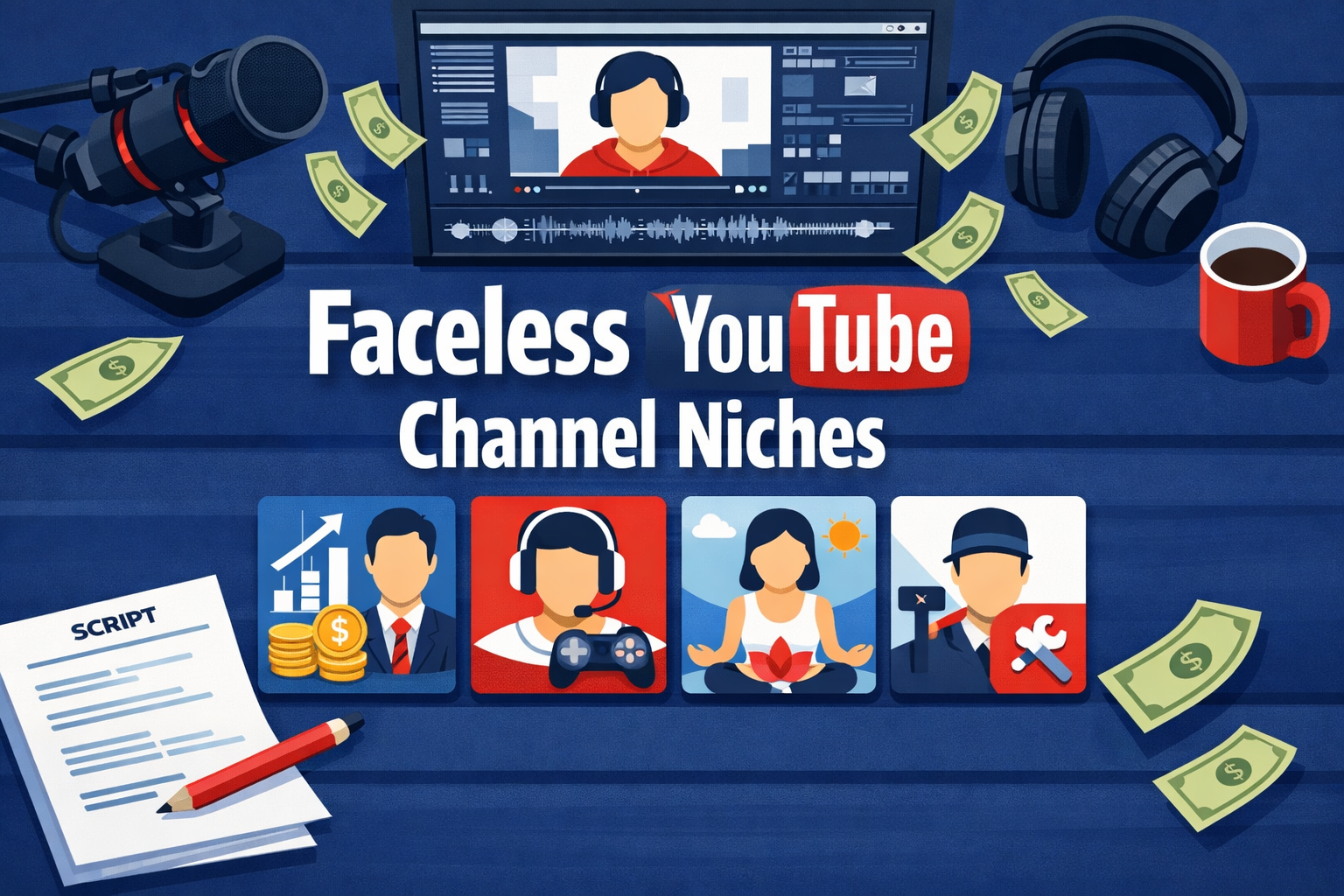
A faceless YouTube channel is exactly what it sounds like — a channel that produces video content without ever showing the creator’s face. Instead of traditional vlogging or talking-head videos, these channels use:
- 📺 Screen recordings (tutorials, software walkthroughs)
- 🎨 Animated graphics or slideshows
- 🎙️ Voiceovers (with or without showing the speaker)
- 🤖 AI-generated voices (text-to-speech tools)
- 🎮 Gameplay footage with commentary
- 🌿 Stock footage or B-roll with narration
- 📊 Whiteboard or explainer animations
💬 “You do not need to be on camera to build an audience. You need to provide value.”
This format has exploded in popularity because it lowers the barrier to entry dramatically. Anyone with a computer, a microphone, and a good idea can start.
Best Niches for Making Money on YouTube Without Showing Your Face
Choosing the right niche is the single most important decision when starting a faceless channel. The niche determines your audience size, advertiser demand, and earning potential.
High-Earning Faceless Niches in 2026
| Niche | Avg. CPM Range | Content Format |
|---|---|---|
| Personal Finance | $12–$30 | Voiceover + charts |
| Health & Wellness | $8–$20 | Stock footage + narration |
| Tech & Software Tutorials | $10–$25 | Screen recording |
| Meditation & Sleep | $5–$15 | Ambient video + music |
| Gaming | $3–$10 | Gameplay footage |
| History & Documentaries | $8–$18 | Stock footage + voiceover |
| Kids’ Education | $6–$14 | Animation + narration |
| AI & Productivity Tools | $12–$28 | Screen recording + voiceover |
CPM (Cost Per Mille) = how much advertisers pay per 1,000 ad views. Higher CPM = more money per viewer.
Tips for Picking Your Niche
- Pick something you understand — even basic knowledge helps with scripting.
- Check advertiser demand — finance and tech niches pay significantly more per view.
- Look at competition — a niche with many successful channels proves there is an audience.
- Think long-term — can you create 100+ videos in this space?
How to Make Money on YouTube Without Showing Your Face: Revenue Streams Explained
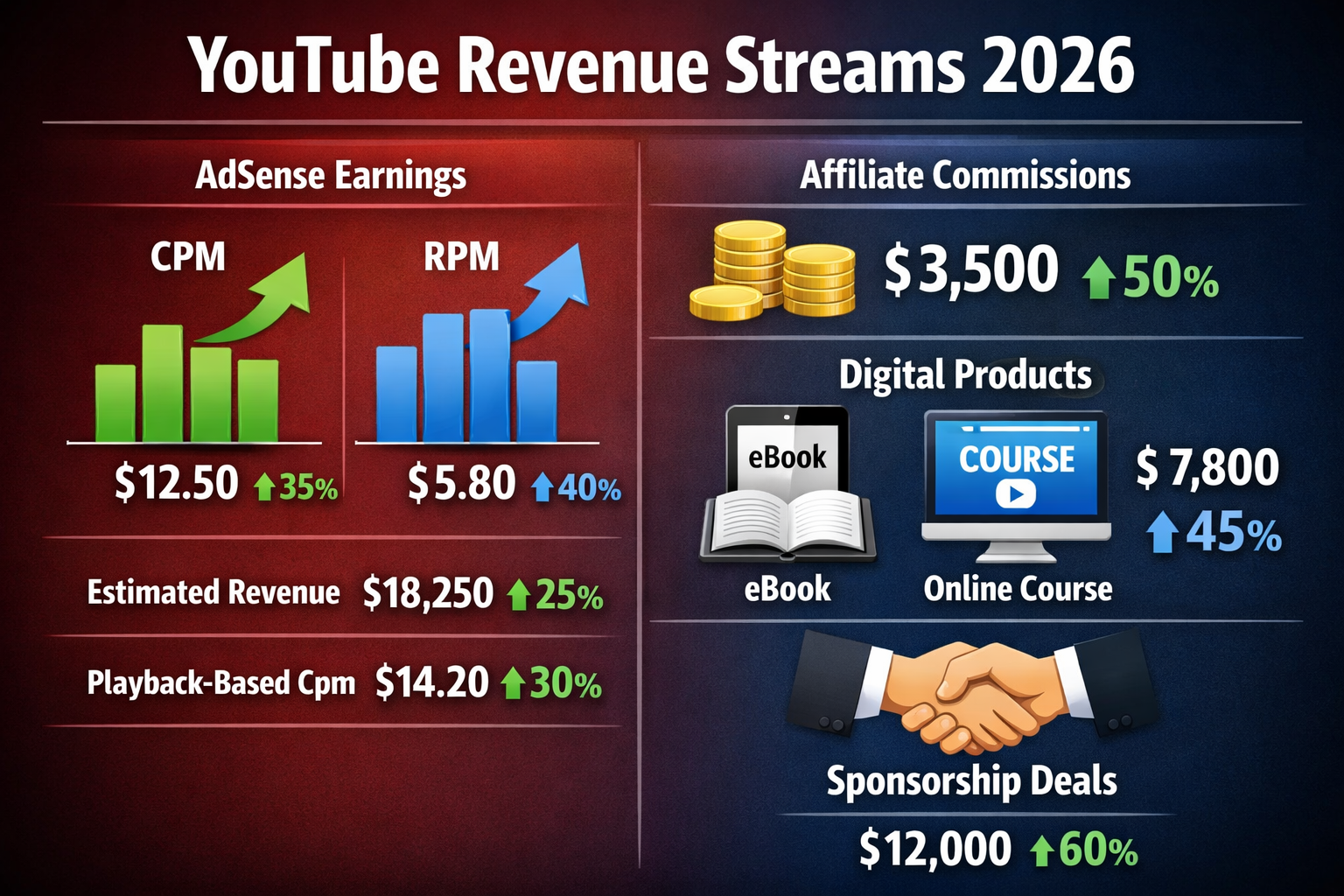
Once a channel is set up and growing, there are several ways to turn views into income. Smart creators combine multiple revenue streams for maximum earnings.
1. 💰 YouTube AdSense (Ad Revenue)
The most well-known method. Once a channel reaches 1,000 subscribers and 4,000 watch hours (or 10 million Shorts views in 90 days), it qualifies for the YouTube Partner Program (YPP).
- Ads are placed automatically on videos.
- Earnings depend on niche, viewer location, and engagement.
- A finance channel with 100,000 monthly views could earn $1,200–$3,000/month from ads alone.
Getting started checklist:
- Create a YouTube channel
- Post consistently (2–4 videos per week recommended)
- Reach 1,000 subscribers + 4,000 watch hours
- Apply for YPP through YouTube Studio
2. 🔗 Affiliate Marketing
Affiliate marketing is often more profitable than AdSense for smaller channels. Creators include special tracking links in their video descriptions. When viewers click and buy, the creator earns a commission.
Popular affiliate programs for faceless channels:
- Amazon Associates — 1%–10% commissions on products
- ShareASale / CJ Affiliate — thousands of brands across niches
- Software tools (e.g., Canva, TubeBuddy, Jasper AI) — often 20%–50% recurring commissions
Example: A tutorial channel about productivity tools recommends a $99/month software. With a 30% commission and just 20 sales per month, that is $594/month from one affiliate link.
3. 🤝 Brand Sponsorships
As channels grow, brands pay for dedicated mentions or integrations in videos. A channel with 50,000 subscribers in a tech niche can charge $500–$2,000 per sponsored segment.
Faceless channels are just as attractive to sponsors as face-forward channels — what matters is the audience, not the creator’s appearance.
4. 📦 Selling Digital Products
Creators can sell their own products directly to their audience:
- E-books or guides related to the niche
- Online courses or workshops
- Templates, presets, or spreadsheets
- Notion dashboards or productivity tools
A finance channel could sell a budgeting spreadsheet for $15. With 200 sales per month, that is $3,000/month in pure profit.
5. 🎯 Channel Memberships & Super Thanks
Once in the YPP, creators can offer channel memberships (monthly subscriptions for exclusive content) and receive Super Thanks tips on videos.
How to Start a Faceless YouTube Channel: Step-by-Step
Step 1: Choose Your Niche and Channel Name
Pick a focused niche (see the table above). Create a channel name that reflects the topic without using your personal name.
Step 2: Plan Your Content Strategy
- Research what is already working in your niche using YouTube search and tools like TubeBuddy or VidIQ.
- Create a content calendar with at least 10–15 video ideas before publishing the first one.
- Focus on search-intent videos (people searching for answers) rather than trend-chasing.
Step 3: Create Your First Video
Here is a simple production workflow for faceless content:
- Write a script — use a clear structure: hook, content, call to action.
- Record a voiceover — use a USB microphone (budget option: ~$50) or AI voice tools.
- Gather visuals — screen record, use stock footage sites (Pexels, Pixabay, Storyblocks), or create animations.
- Edit the video — tools like CapCut, DaVinci Resolve (free), or Adobe Premiere Pro.
- Design a thumbnail — use Canva to create bold, click-worthy thumbnails.
- Write an SEO-optimized title and description — include target keywords naturally.
Step 4: Optimize for YouTube SEO
YouTube is the world’s second-largest search engine. Getting found requires:
- Keyword-rich titles (e.g., “Best Budgeting Apps for Beginners 2026”)
- Detailed descriptions with keywords in the first 2–3 sentences
- Tags that match the video topic
- Chapters/timestamps to improve watch time
- Custom thumbnails with high contrast and readable text
Step 5: Publish Consistently
Consistency beats perfection. Aim for 1–2 videos per week at minimum. YouTube’s algorithm rewards channels that upload regularly and keep viewers watching.
Tools You Need to Run a Faceless YouTube Channel
| Tool | Purpose | Cost |
|---|---|---|
| CapCut / DaVinci Resolve | Video editing | Free |
| Canva | Thumbnails & graphics | Free / $13/mo |
| ElevenLabs / Murf.ai | AI voiceover | $5–$22/mo |
| TubeBuddy / VidIQ | YouTube SEO & research | Free / $9–$49/mo |
| Pexels / Pixabay | Free stock footage | Free |
| Storyblocks | Premium stock footage | $15–$30/mo |
| ChatGPT / Claude | Script writing assistance | Free / $20/mo |
| OBS Studio | Screen recording | Free |
💡 Pro tip: Start with free tools only. Upgrade once the channel starts generating revenue. Many successful faceless channels were built entirely with free software.
Realistic Earning Potential: What to Expect
One of the most common questions from beginners is: “How much can I actually make?”
Here is a realistic breakdown based on channel size and niche:
| Channel Size | Monthly Views | Estimated Monthly Earnings |
|---|---|---|
| Small (5K subs) | 20,000 | $50–$300 |
| Growing (25K subs) | 100,000 | $500–$2,000 |
| Established (100K subs) | 500,000 | $2,500–$10,000+ |
| Large (500K+ subs) | 2M+ | $10,000–$50,000+ |
⚠️ Important note: These figures include multiple revenue streams (ads + affiliate + products). Ad revenue alone will be lower. Results vary significantly by niche, content quality, and audience engagement.
Realistic timeline:
- Month 1–3: Building content library, minimal views
- Month 3–6: First signs of organic growth, possibly first affiliate earnings
- Month 6–12: Approaching or reaching YPP eligibility
- Year 1–2: First consistent monthly income
Common Mistakes to Avoid
🚫 Choosing a niche with no advertiser demand — passion is great, but low CPM niches limit earning potential.
🚫 Ignoring YouTube SEO — without optimization, even great videos go unnoticed.
🚫 Giving up too early — most successful channels took 6–18 months to gain traction.
🚫 Copying competitors exactly — take inspiration, but add a unique angle or perspective.
🚫 Skipping thumbnails and titles — these are the #1 factor in whether someone clicks on a video.
🚫 Using copyrighted music or footage — always use royalty-free assets to avoid strikes.
Conclusion: Your Action Plan for Faceless YouTube Success
Learning how to make money on YouTube without showing your face is one of the most accessible paths to building passive income in 2026. The barrier to entry is low, the tools are affordable (often free), and the earning potential is genuinely life-changing with consistency and the right strategy.
Your Next Steps 🚀
- Today: Pick a niche from the table above that matches your interests and has strong CPM potential.
- This week: Set up your YouTube channel, install TubeBuddy or VidIQ, and brainstorm 15 video ideas.
- This month: Script, record, and publish your first 4 videos. Focus on quality over quantity.
- In 3 months: Analyze performance, double down on what works, and add an affiliate link to every video description.
- In 6–12 months: Apply for YPP, launch a digital product, and start pitching sponsors.
💬 “The best time to start a YouTube channel was two years ago. The second best time is today.”
Faceless YouTube channels are not a get-rich-quick scheme — they are a legitimate, scalable business model that rewards creators who show up consistently and deliver real value. Start small, stay consistent, and let the platform’s algorithm work in your favor.