Quick Answer: The best remote jobs for beginners with no degree include virtual assistant, customer service representative, freelance writer, data entry clerk, social media manager, and online tutor. Most of these roles pay between $15 and $35 per hour, require only basic computer skills to start, and can be found on platforms like Upwork, Indeed, and LinkedIn within days of applying.
Key Takeaways
- No college degree is required for dozens of legitimate, well-paying remote jobs available right now.
- Most beginner-friendly remote roles need only a computer, a reliable internet connection, and basic communication skills.
- Platforms like Upwork, Fiverr, FlexJobs, and Remote.co list hundreds of entry-level remote positions daily.
- Starting pay for beginner remote workers typically ranges from $13 to $20 per hour, with growth potential as skills build.
- Freelance and contract work lets beginners start earning quickly, sometimes within the first week of signing up.
- Building a simple portfolio, even with unpaid or personal projects, dramatically improves hiring chances.
- Scams are common in the remote job space — any role that asks for upfront payment is a red flag.
- Consistency and specialization are the fastest paths from entry-level pay to $30–$50+ per hour over time.
What Are the Best Remote Jobs for Beginners (No Degree Needed)?
The best remote jobs for beginners with no degree are roles that rely on transferable skills most people already have, such as writing, organizing, communicating, or browsing the internet efficiently. These jobs are entry-level by design, meaning employers expect to train new hires rather than require years of experience.
Here are the top options worth considering in 2026:
| Job Title | Avg. Starting Pay | Key Skill Needed | Best Platform to Find Work |
|---|---|---|---|
| Virtual Assistant | $15–$25/hr | Organization, email | Upwork, Belay, Time Etc |
| Customer Service Rep | $13–$20/hr | Communication | Indeed, Remote.co |
| Freelance Writer | $15–$40/hr | Writing, research | Upwork, ProBlogger |
| Data Entry Clerk | $13–$18/hr | Typing, attention to detail | Indeed, Clickworker |
| Social Media Manager | $16–$30/hr | Social platforms, creativity | LinkedIn, Fiverr |
| Online Tutor | $18–$40/hr | Subject knowledge | Tutor.com, Wyzant |
| Transcriptionist | $13–$20/hr | Listening, typing | Rev, TranscribeMe |
| Content Moderator | $14–$20/hr | Judgment, attention | Indeed, Teleperformance |
💡 Choose a role based on what you already do well. If you’re a strong communicator, customer service or virtual assistant work is a natural fit. If you enjoy writing, freelance content creation offers faster income growth over time.
Who Are These Remote Jobs Actually For?
Entry-level remote jobs with no degree requirement are designed for people who are new to remote work, changing careers, or looking to supplement existing income. They work best for stay-at-home parents, recent high school graduates, people between jobs, and side hustlers who want flexible hours without commuting.
These roles are not the right fit if someone is looking for immediate six-figure income or highly specialized technical work. Most beginner remote jobs start at modest pay, but they serve as a real launching pad for higher-paying freelance or full-time remote careers.
Good candidates for beginner remote work:
- People with no formal work history but strong self-discipline
- Career changers who want to test a new field with low risk
- Students looking for part-time income around their schedule
- Anyone in a rural area with limited local job options
How Much Can a Beginner Actually Earn Working Remotely?
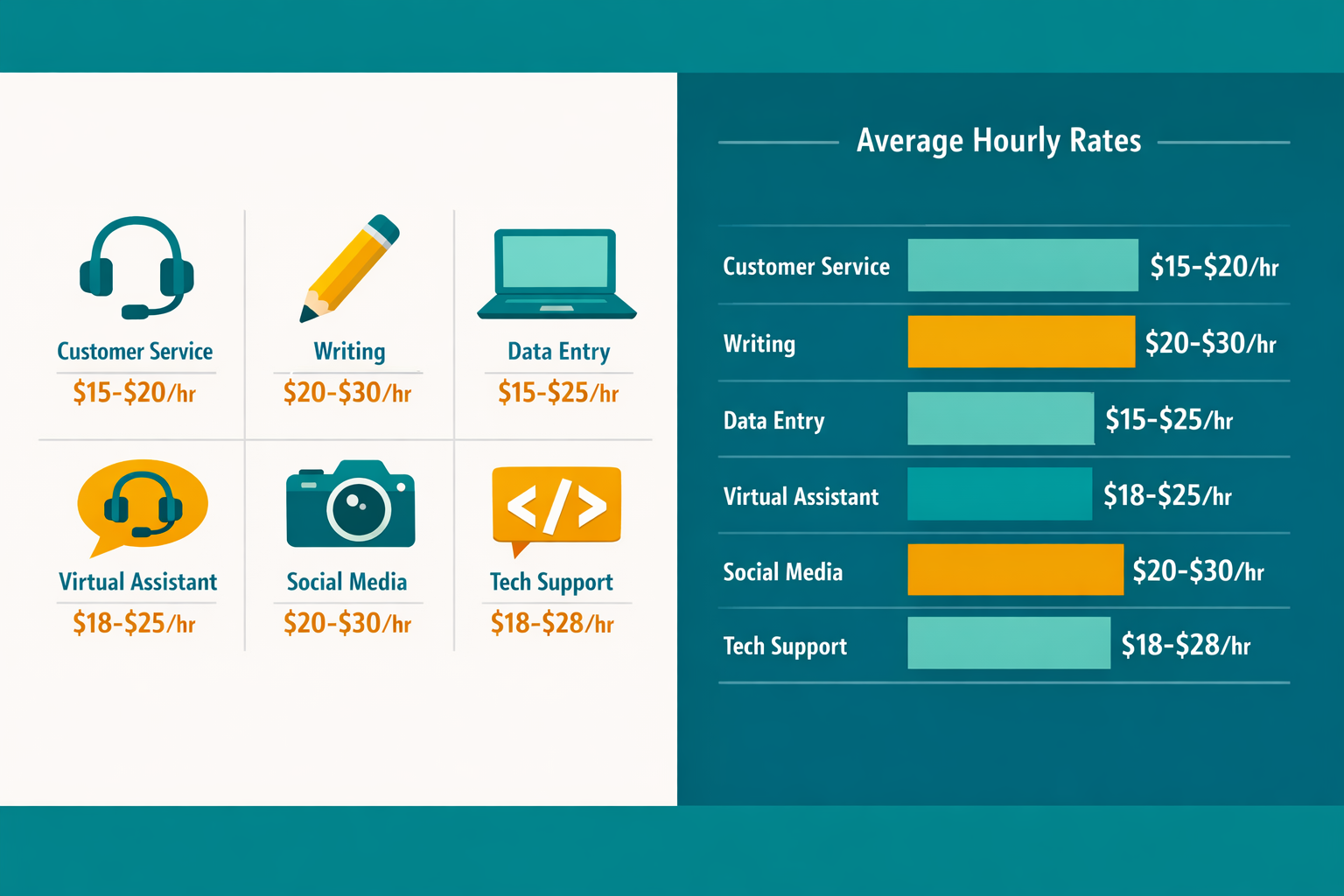
Beginner remote workers can realistically expect to earn between $13 and $25 per hour when starting out, depending on the role and platform. Income grows significantly with experience, positive reviews, and specialization.
Here’s a realistic income breakdown by stage:
Month 1–3 (Getting started):
- Most beginners earn $500–$1,500/month while building a client base or getting hired for part-time roles.
- Data entry and transcription work often pay per task, so volume matters early on.
Month 4–12 (Building experience):
- With consistent work and good reviews, freelancers on Upwork or Fiverr can reach $2,000–$4,000/month.
- Full-time remote customer service or VA roles often include benefits and predictable pay.
Year 2+ (Specializing):
- Specialized virtual assistants (e.g., those who know bookkeeping or project management tools) earn $35–$60/hour.
- Freelance writers who focus on a niche like finance or health can charge $0.10–$0.30 per word or more.
Common mistake: Many beginners undercharge to get their first client, then stay stuck at low rates. Set a minimum rate from day one and raise it after every 3–5 positive reviews.
Where Do Beginners Find Legitimate Remote Jobs (No Degree Needed)?
The most reliable platforms for finding beginner remote jobs with no degree are Upwork, Indeed, FlexJobs, Remote.co, and LinkedIn. Each serves a slightly different purpose, so using two or three together improves results.
Best platforms by job type:
- Upwork and Fiverr — Best for freelancers offering writing, VA work, data entry, or social media services. Free to join; Upwork charges a service fee on earnings.
- Indeed and LinkedIn — Best for finding part-time or full-time remote employment with a company. Filter by “remote” and “entry level.”
- FlexJobs — Curated, scam-free listings. Requires a small subscription fee (worth it for serious job seekers).
- Rev and TranscribeMe — Dedicated platforms for transcription and captioning work. Pay per audio minute.
- Tutor.com and Wyzant — For tutoring in any subject where the applicant has strong knowledge.
- Clickworker and Amazon Mechanical Turk — Microtask platforms good for earning small amounts quickly while building skills.
How to avoid scams:
- Never pay a fee to apply for a job.
- Avoid listings that promise $500/day with “no experience” and vague job descriptions.
- Verify companies on sites like Glassdoor or the Better Business Bureau before sharing personal information.
What Skills Do Beginners Need for Remote Jobs (No Degree Required)?
Most beginner remote jobs require a small set of practical skills that can be learned quickly, often for free. No degree is needed, but demonstrating these skills clearly in a profile or resume makes a significant difference.
Core skills for almost every beginner remote job:
- Reliable internet connection and a working computer or laptop
- Basic proficiency in Google Workspace (Docs, Sheets, Gmail) or Microsoft Office
- Clear written communication (emails, chat messages, reports)
- Time management and the ability to work without supervision
- Familiarity with video tools like Zoom or Google Meet
Role-specific skills worth developing:
- Virtual Assistant: Trello, Asana, Slack, calendar management
- Freelance Writer: SEO basics, Google Docs, research skills
- Social Media Manager: Canva, Meta Business Suite, scheduling tools like Buffer
- Customer Service: CRM tools like Zendesk or Freshdesk, conflict resolution
- Transcriptionist: Fast, accurate typing (aim for 60+ words per minute)
Free learning resources include Google’s Digital Garage, HubSpot Academy, Coursera (many free courses), and YouTube tutorials. Most skills needed for beginner remote work can be learned in two to four weeks of focused effort.
How to Get Your First Remote Job as a Complete Beginner
Getting a first remote job as a beginner comes down to three things: a clear profile, targeted applications, and a small portfolio. Most beginners skip at least one of these and wonder why they’re not getting responses.
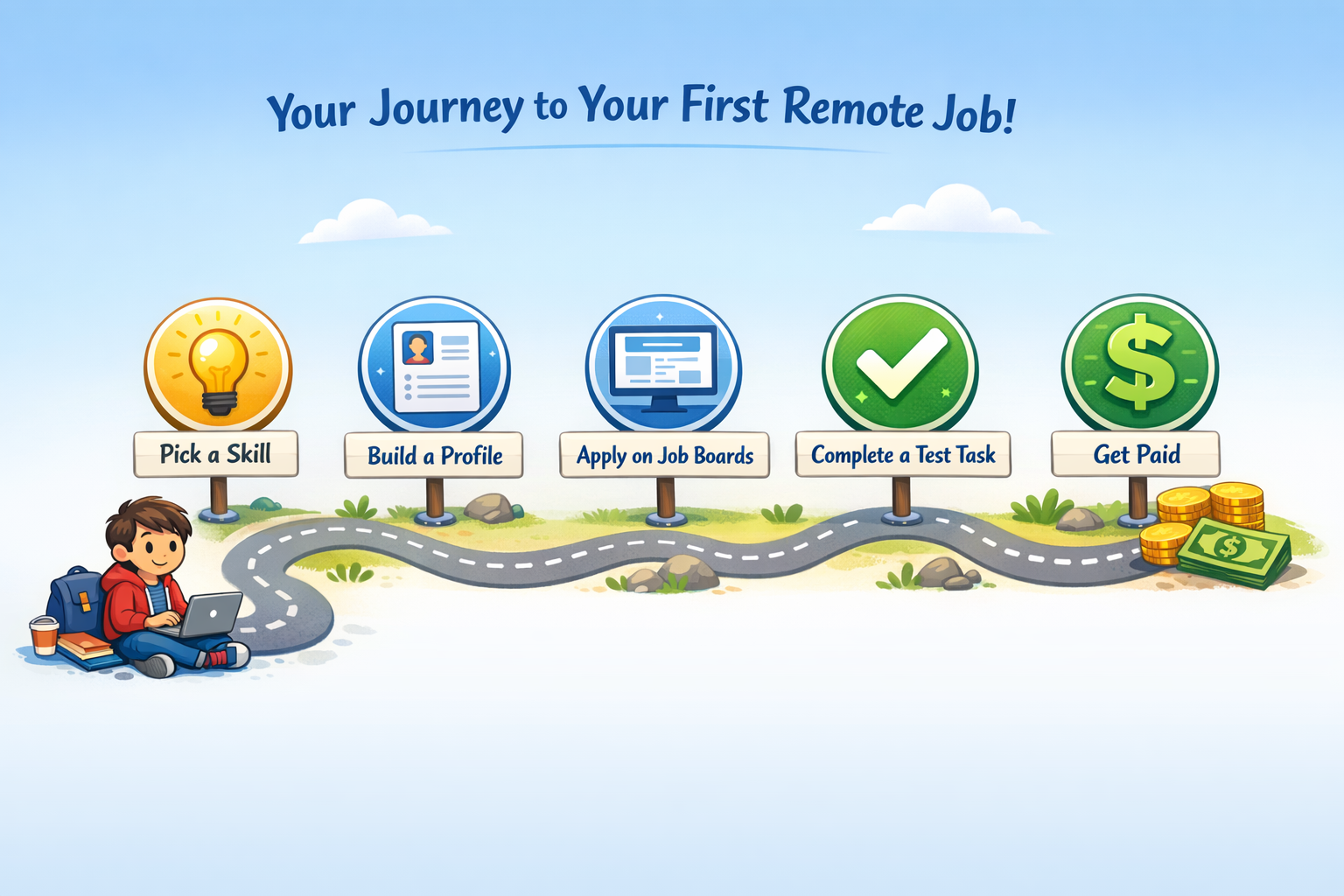
Step-by-step process:
- Pick one role to focus on. Trying to apply for five different job types at once leads to generic applications. Choose the role that matches existing skills most closely.
- Set up a professional profile. On Upwork or LinkedIn, use a real photo, write a clear headline (e.g., “Reliable Virtual Assistant | Email & Calendar Management”), and list any relevant experience, even if it’s personal or volunteer work.
- Build a basic portfolio. For writers, write two or three sample articles on topics of interest. For VAs, create a sample project management board in Trello. For social media managers, mock up three posts for a fictional brand using Canva. Free work is not required — samples are enough.
- Apply to 5–10 jobs per day. Customize each application. Reference the specific job posting, explain why the role is a good fit, and include one relevant sample.
- Follow up once. If there’s no response after five to seven business days, send a polite one-line follow-up. Many hiring managers miss initial messages.
- Complete a test task honestly. Many remote employers send a short paid or unpaid test. Treat it like a real assignment — it’s often the deciding factor.
- Ask for a review after the first job. Positive reviews on platforms like Upwork are the fastest way to increase visibility and justify higher rates.
What Are the Pros and Cons of Entry-Level Remote Work?
Entry-level remote work offers real flexibility and income potential, but it also comes with challenges beginners should prepare for honestly.
Pros:
- Work from anywhere with an internet connection
- No commute, which saves time and money
- Flexible hours in many freelance roles
- Low barrier to entry — no degree or expensive certifications required
- Income can scale quickly with skill development
Cons:
- Starting pay is modest (often $13–$18/hour for true beginners)
- Isolation can be a challenge without a structured office environment
- Freelance income is inconsistent early on
- Self-discipline is essential — no manager watching over daily tasks
- Scams are more common in remote job listings than in-office roles
Edge case to know: Some remote jobs labeled “entry level” still require one to two years of experience. Read job descriptions carefully and apply only to roles where the listed requirements genuinely match current skills.
Frequently Asked Questions
Can someone really get a remote job with no experience at all?
Yes. Platforms like Upwork, Rev, and Clickworker allow beginners to start with zero professional experience. The key is demonstrating reliability and basic skills through a strong profile and sample work.
How long does it take to land the first remote job?
Most beginners land their first paid remote work within two to four weeks of actively applying, assuming they’re applying daily and have a complete profile. Passive job searching (applying once a week) can stretch this to two to three months.
Is it better to freelance or find a remote employee position?
Freelancing offers faster access to work and flexible hours but comes with income instability. Remote employee positions offer steady pay and benefits but are more competitive. Beginners who need immediate income often start freelancing, then transition to employment once they have a track record.
What equipment is needed to start a remote job?
A laptop or desktop computer, a reliable internet connection (at least 25 Mbps), a headset for calls, and a quiet workspace are the essentials. Most beginner remote jobs don’t require any specialized hardware.
Are remote jobs for beginners actually legitimate?
Many are, but scams exist. Legitimate employers never charge application fees, always communicate through official company emails, and list verifiable company information. Cross-check any employer on LinkedIn or Glassdoor before proceeding.
What is the fastest remote job to start earning money?
Transcription (via Rev or TranscribeMe) and microtask work (via Clickworker) are typically the fastest ways to earn money remotely, sometimes within 24–48 hours of approval. Pay is lower than other roles, but there’s almost no barrier to entry.
Do remote jobs require a specific location?
Some remote jobs are location-restricted due to tax laws or time zone requirements. Always check the job listing for location eligibility before applying, especially for customer service roles that often require U.S. or specific country residency.
Can someone do remote work part-time alongside another job?
Absolutely. Many beginner remote roles, especially freelance writing, virtual assistance, and transcription, are designed for part-time schedules. It’s one of the most common ways people test remote work before committing fully.
What’s the biggest mistake beginners make when starting remote work?
Underpricing services and failing to raise rates over time. Many beginners set low rates to attract clients and never adjust them, which leads to burnout and stagnant income. Set a minimum acceptable rate from day one.
Is customer service a good first remote job?
Yes. Remote customer service is one of the most widely available entry-level remote roles, often comes with paid training, and builds communication skills that transfer to many other career paths.
Conclusion: Your Next Steps Start Today
The best remote jobs for beginners with no degree needed are more accessible in 2026 than at any previous point. Roles like virtual assistant, freelance writer, customer service representative, and online tutor offer real income without requiring a college diploma, expensive training programs, or years of experience.
Here’s what to do right now:
- Pick one job type from the table above that matches existing strengths.
- Set up a free profile on Upwork or LinkedIn today — complete every section.
- Create two or three work samples relevant to the chosen role (this takes one afternoon).
- Apply to at least five positions within the next 48 hours.
- Follow up, stay consistent, and raise rates after the first three to five completed jobs.
The path from zero to a sustainable remote income isn’t complicated, but it does require action. Starting with one focused role, building a small body of work, and applying consistently is all it takes to get the first client or employer on board. Everything else builds from there.