Imagine waking up to a notification that says you made money while you slept. No alarm clock, no commute, no boss. That is the promise of passive income — and in 2026, learning how to earn passive income with digital products is one of the most accessible ways to make it happen. Whether you are a freelancer, a side hustler, or simply someone who wants financial freedom, digital products offer a low-cost, high-reward path to building income streams that work for you around the clock.
Key Takeaways 📌
- Digital products — such as ebooks, online courses, templates, and stock assets — can be created once and sold repeatedly with minimal ongoing effort.
- Startup costs are low: most creators launch their first digital product for under $100.
- The best platforms for selling digital products in 2026 include Gumroad, Etsy, Teachable, and your own website.
- Marketing is the engine: consistent promotion through SEO, email lists, and social media drives long-term passive sales.
- Realistic earnings range from $200 to $5,000+ per month, depending on niche, product quality, and marketing effort.
What Are Digital Products and Why They’re Perfect for Passive Income
Before diving into the how-to, it helps to understand exactly what digital products are and why they are such a powerful vehicle for passive income.
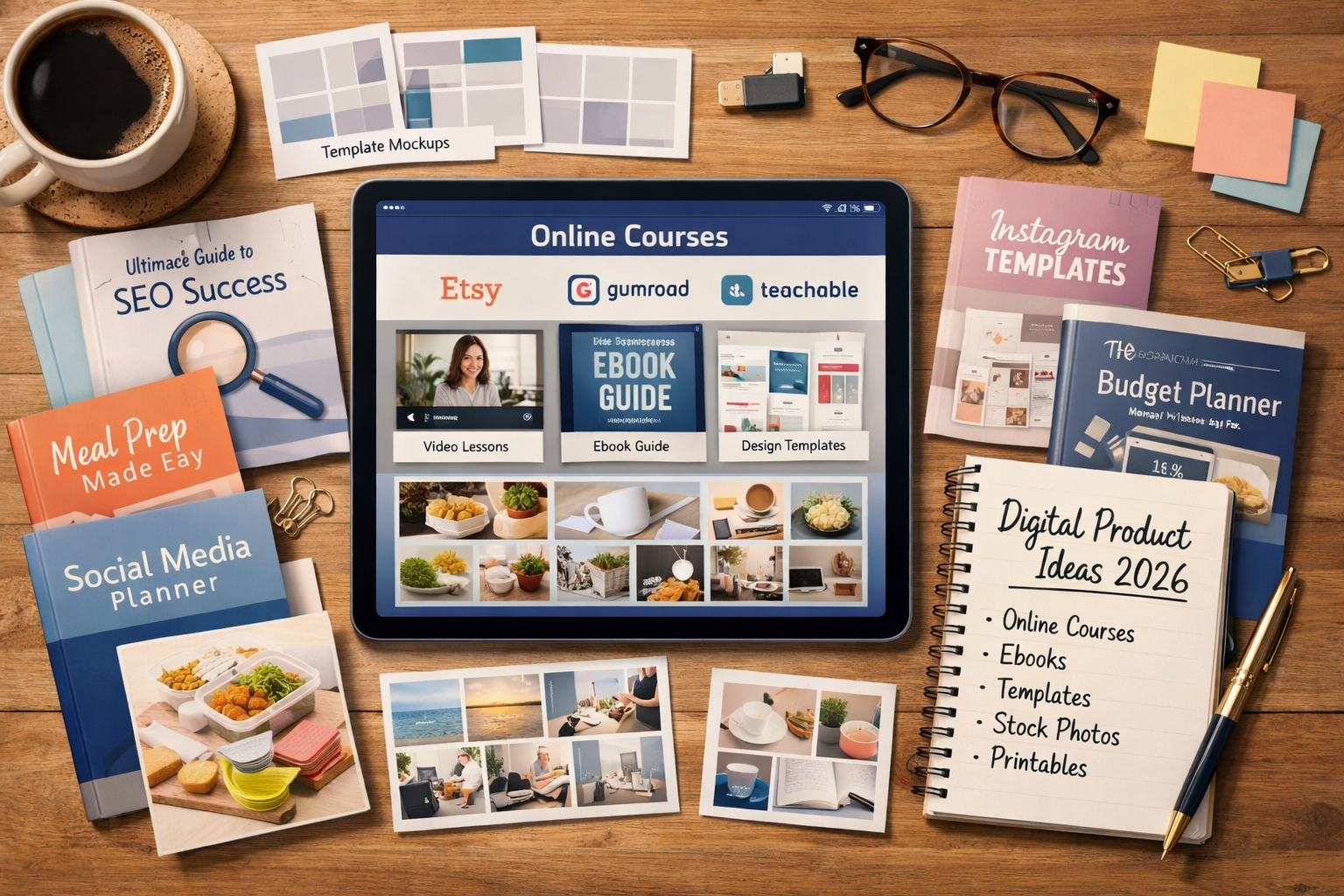
Digital products are intangible goods delivered electronically. There is no inventory, no shipping, and no manufacturing cost. Once created, the same file can be sold an unlimited number of times.
Common Types of Digital Products
| Product Type | Examples | Avg. Price Range |
|---|---|---|
| 📘 Ebooks & Guides | How-to guides, recipe books, workbooks | $7 – $47 |
| 🎓 Online Courses | Video lessons, mini-courses, masterclasses | $27 – $997 |
| 🖼️ Templates | Canva templates, resume templates, spreadsheets | $5 – $49 |
| 🎵 Digital Audio | Music tracks, sound effects, meditation audio | $5 – $99 |
| 📷 Stock Assets | Photos, illustrations, Lightroom presets | $5 – $50 |
| 💻 Software & Tools | Notion templates, plugins, scripts | $9 – $199 |
| 🎨 Printables | Planners, wall art, worksheets | $3 – $25 |
💡 Pull Quote: “The beauty of digital products is simple: you do the work once, and the product keeps selling for months — even years — afterward.”
Why Digital Products Beat Other Passive Income Methods
- No inventory or shipping costs — pure profit margin
- Scalable instantly — sell to 1 person or 10,000 people with the same effort
- Global market — reach buyers in any country, any time zone
- Low barrier to entry — no degree, no office, no large investment required
- Fast to launch — a simple ebook or template can be ready in a weekend
How to Earn Passive Income with Digital Products: Step-by-Step
Ready to get started? Here is a practical, beginner-friendly roadmap that breaks down how to earn passive income with digital products from idea to first sale.
Step 1: Choose a Profitable Niche
The biggest mistake beginners make is creating a product nobody wants. Start with demand first, then create.
Ask these questions:
- What do people in your life constantly ask you for help with?
- What skills do you have that others would pay to learn?
- What problems exist in your industry that a template or guide could solve?
Hot niches in 2026:
- Personal finance and budgeting
- AI tools and productivity
- Small business marketing
- Health, fitness, and wellness
- Parenting and education
- Remote work and freelancing
Use free tools like Google Trends, AnswerThePublic, and Etsy search to validate demand before creating anything.
Step 2: Create Your First Digital Product
Keep it simple. Your first product does not need to be a 10-hour course. A well-designed PDF guide or Canva template can generate real income.
Beginner-friendly tools to create digital products:
| Tool | Best For | Cost |
|---|---|---|
| Canva | Templates, ebooks, printables | Free / $13/mo |
| Google Docs | Guides, workbooks | Free |
| Loom | Video lessons | Free / $12.50/mo |
| Teachable | Online courses | From $39/mo |
| Notion | Notion templates | Free |
| GarageBand | Audio products | Free (Mac) |
Pro tip: Solve one specific problem. A product called “30-Day Budget Tracker for Freelancers” will outsell a generic “Finance Planner” every time.
Step 3: Pick the Right Platform to Sell
Choosing the right marketplace is critical. Here are the top options for beginners in 2026:
🛒 Marketplaces (built-in audience):
- Etsy — Great for printables, templates, and digital art
- Creative Market — Ideal for design assets and fonts
- Teachers Pay Teachers — Perfect for educational resources
- Udemy — Best for video courses with a large existing audience
🏪 Self-hosted platforms (more control):
- Gumroad — Simple, beginner-friendly, low fees
- Payhip — Free plan available, great for ebooks
- Shopify — Best for scaling a full digital product store
- Podia — Combines courses, memberships, and digital downloads
🔑 Recommendation for beginners: Start with Gumroad or Etsy for zero upfront cost and built-in traffic. Once you understand your audience, migrate to your own website for higher profit margins.
Step 4: Price Your Product Strategically
Pricing is where many beginners leave money on the table. Here is a simple framework:
- Low-ticket ($5–$27): Printables, single templates, short guides — great for volume
- Mid-ticket ($27–$97): Ebooks, template bundles, mini-courses — best ROI for beginners
- High-ticket ($97–$997+): Full courses, coaching programs, software — requires trust and audience
Psychological pricing tip: $27 converts better than $25, and $97 converts better than $100. Odd numbers feel more specific and credible.
Step 5: Set Up Automated Delivery
The “passive” part of passive income comes from automation. Once a customer pays, the product should be delivered instantly and automatically — no manual work required.
Most platforms like Gumroad, Payhip, and Teachable handle this automatically. If using your own website with WordPress, plugins like Easy Digital Downloads or WooCommerce manage delivery seamlessly.
Automation checklist:
- ✅ Instant download link sent on purchase
- ✅ Automated confirmation email
- ✅ Optional: upsell or thank-you page offer
- ✅ Automated refund policy in place
Marketing Your Digital Products to Drive Passive Sales
Creating the product is only half the battle. The real work — and the real opportunity — lies in marketing. Without consistent promotion, even the best digital product will sit unnoticed.
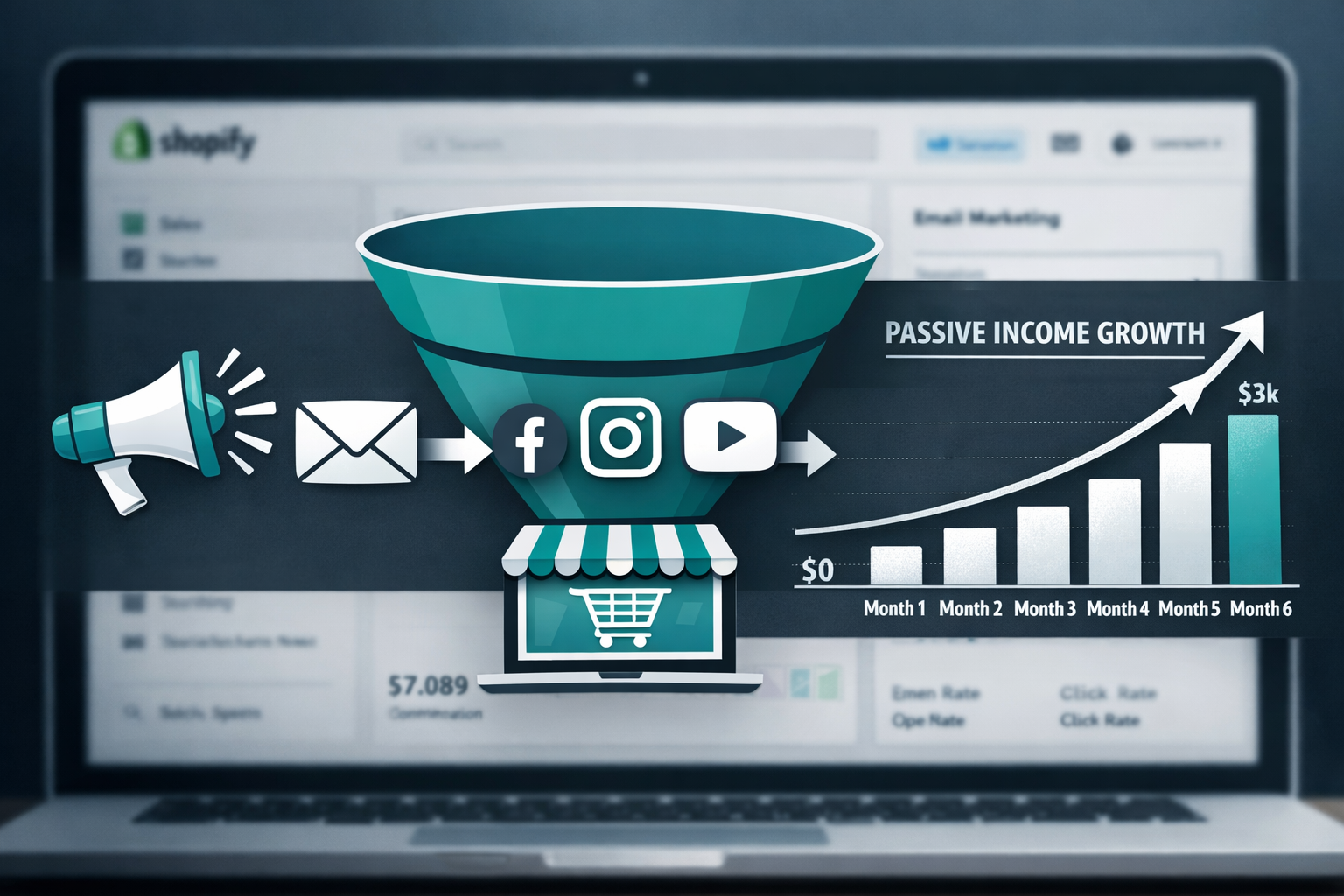
Build an Email List First
An email list is the most valuable asset any digital product creator can own. Unlike social media followers, you own your email list. Platforms change algorithms; email does not.
How to build an email list fast:
- Offer a free lead magnet — a mini version of your paid product
- Use a tool like ConvertKit or MailerLite (both have free plans)
- Add a sign-up form to your website or link-in-bio page
- Send weekly value emails to build trust before pitching
Even a list of 500 engaged subscribers can generate consistent monthly sales.
Leverage SEO for Long-Term Organic Traffic
Search engine optimization (SEO) is the ultimate passive marketing strategy. A well-optimized blog post or product listing can bring in buyers for years without additional effort.
Quick SEO wins for digital product sellers:
- Write blog posts that answer questions your ideal buyer is searching for
- Optimize Etsy listings with keyword-rich titles and descriptions
- Create a Pinterest strategy — Pinterest drives significant traffic to digital product stores
- Use YouTube to create free tutorials that lead viewers to your paid products
Use Social Media Strategically
You do not need to be on every platform. Pick one or two where your audience hangs out and go deep.
| Platform | Best For | Content Type |
|---|---|---|
| Visual products (templates, art) | Reels, carousels | |
| TikTok | Broad reach, younger audience | Short tutorials |
| Evergreen traffic | Pins, idea boards | |
| B2B, professional tools | Articles, posts | |
| YouTube | In-depth tutorials | Long-form video |
Post consistently, provide value first, and promote second. A 90/10 rule works well: 90% helpful content, 10% promotion.
Consider Paid Advertising (Once Profitable)
Once a product is proven to sell organically, reinvesting a portion of profits into Facebook Ads, Pinterest Ads, or Google Ads can significantly scale income. However, this step is best saved for after the first $500–$1,000 in organic sales.
Realistic Earning Potential: What to Expect
Honesty matters here. Digital product income is not a get-rich-quick scheme. It takes consistent effort upfront. But the payoff compounds over time.
| Stage | Timeline | Realistic Monthly Income |
|---|---|---|
| Beginner (just starting) | 0–3 months | $0 – $200 |
| Growing (1 product, small audience) | 3–6 months | $200 – $800 |
| Established (2–3 products, email list) | 6–12 months | $800 – $2,500 |
| Scaling (multiple products, SEO traffic) | 12–24 months | $2,500 – $10,000+ |
💬 Real-world example: A graphic designer who creates and sells Canva templates on Etsy can realistically earn $500–$2,000/month within 12 months by listing 20–30 quality templates and optimizing for Etsy SEO.
Common Mistakes to Avoid
Even motivated creators stumble on the same pitfalls. Avoid these early:
- ❌ Creating without validating — always confirm demand before spending weeks building
- ❌ Pricing too low — underpricing signals low quality; test higher price points
- ❌ Ignoring marketing — a great product with no promotion earns nothing
- ❌ Waiting for perfection — a “good enough” product launched today beats a perfect product launched never
- ❌ Relying on one platform — diversify across 2–3 channels to reduce risk
Conclusion: Your Action Plan Starts Today
Learning how to earn passive income with digital products is one of the smartest financial moves available in 2026. The barrier to entry is low, the earning potential is real, and the freedom it creates is life-changing.
Here is a simple 3-step action plan to get started this week:
- 📝 Pick your niche and validate demand — spend 2 hours on Etsy and Google Trends to find a gap you can fill.
- 🛠️ Create a simple first product — aim for a PDF guide, Canva template, or short video course using free tools.
- 🚀 List it on Gumroad or Etsy — set up automated delivery, write a compelling description, and share it with your network.
The first sale is the hardest. After that, every sale builds momentum. Start small, stay consistent, and let your digital products do the work for you.