
Imagine waking up to a notification that says, “You made a sale while you slept.” 💸 That’s the reality for thousands of creators, freelancers, and side hustlers who have discovered the power of selling digital products online. In 2026, the digital product market is booming — and finding the best platforms to sell digital products online is the first and most important step toward building real passive income.
Whether you’re a graphic designer, teacher, writer, or musician, there’s a platform built for you. This guide breaks down the top options, compares their features, and helps you choose the right one to start earning today.
Key Takeaways 🔑
- Digital products (ebooks, templates, courses, music) can generate passive income with little overhead cost.
- The best platforms to sell digital products online vary by product type, audience size, and budget.
- Some platforms charge monthly fees; others take a small commission per sale — choose based on your stage of growth.
- Beginners should start with low-cost or free platforms like Gumroad or Payhip before scaling up.
- You don’t need a large audience to make your first sale — the right platform does the marketing heavy lifting.
What Are Digital Products and Why Sell Them?
Digital products are files or content that customers download or access online. There’s no shipping, no inventory, and no physical storage required. Once created, a digital product can be sold an unlimited number of times.
Popular digital products include:
- 📘 Ebooks and guides
- 🎨 Design templates (Canva, Photoshop, Notion)
- 🎓 Online courses and video tutorials
- 🎵 Music, sound effects, and audio files
- 📊 Spreadsheets, planners, and trackers
- 💻 Software, plugins, and code snippets
- 📸 Stock photos and presets
“The beauty of digital products is that you create once and earn forever.”
Realistic Earning Potential
| Product Type | Avg. Price Range | Monthly Earning Potential |
|---|---|---|
| Ebook | $5 – $30 | $200 – $2,000+ |
| Online Course | $50 – $500 | $500 – $10,000+ |
| Design Template | $5 – $50 | $300 – $5,000+ |
| Presets / Filters | $10 – $40 | $200 – $3,000+ |
| Music / Audio | $5 – $100 | $100 – $2,000+ |
These numbers are realistic for creators who are consistent and market their products well. You won’t get rich overnight, but with the right platform and product, steady income is very achievable.
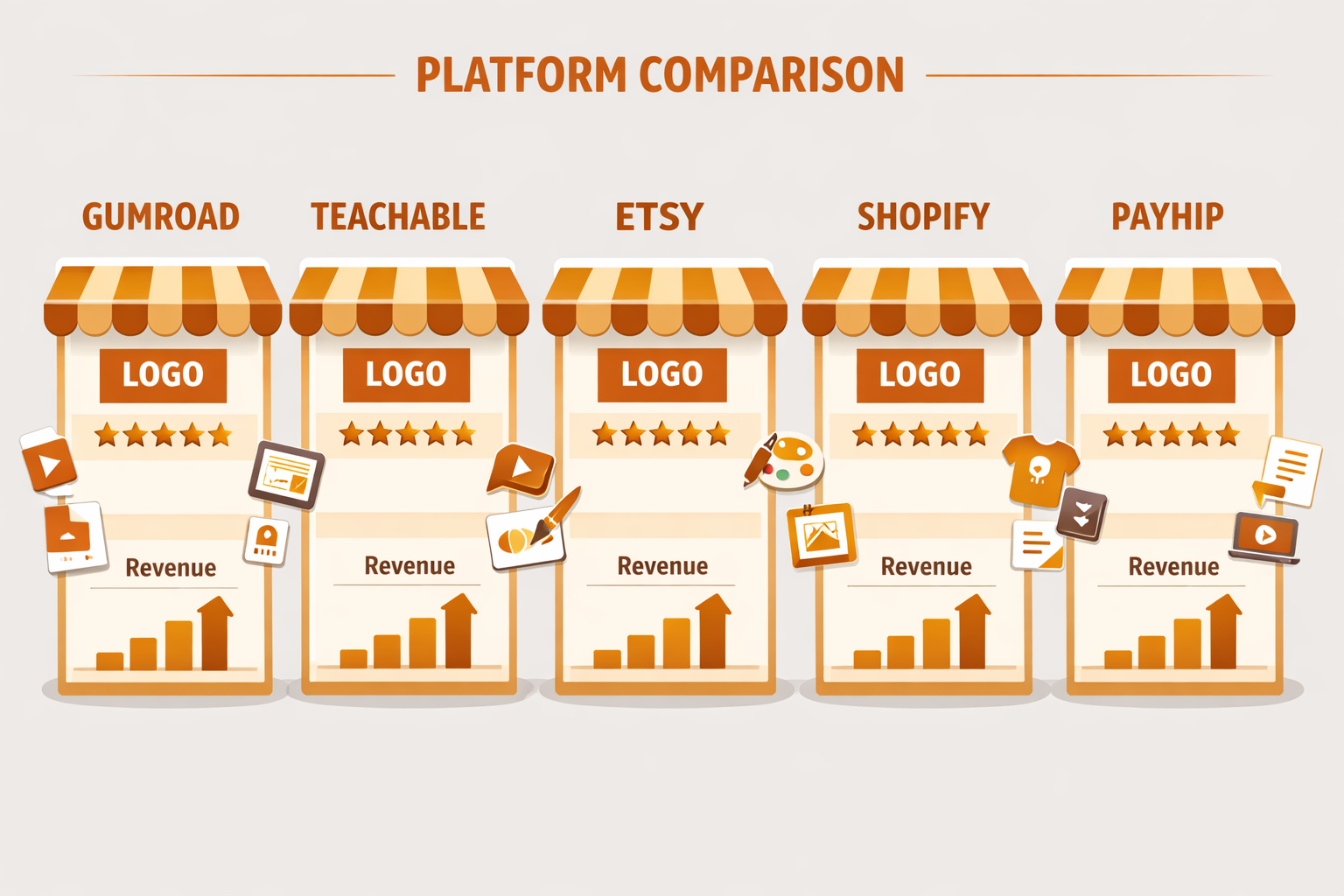
Best Platforms to Sell Digital Products Online: Top Picks for 2026
Choosing the right platform depends on your product type, technical comfort level, and how much you want to earn. Here’s a breakdown of the top platforms available right now.
1. 🟠 Gumroad — Best for Beginners
Gumroad is one of the most beginner-friendly platforms on the market. It’s free to start, and you only pay a flat 10% fee per sale. No monthly subscription required.
Why it’s great:
- Easy setup — list a product in under 10 minutes
- Supports ebooks, courses, memberships, and software
- Built-in audience discovery through the Gumroad marketplace
- Accepts PayPal and credit cards
Best for: First-time sellers, writers, illustrators, and indie creators.
2. 🟢 Payhip — Best Free All-in-One Option
Payhip offers a generous free plan with a 5% transaction fee. It supports digital downloads, online courses, memberships, and even coaching services.
Why it’s great:
- No monthly fee on the free plan
- Built-in affiliate marketing tools
- EU VAT handling (great for international sellers)
- Clean, simple storefront
Best for: Beginners who want an all-in-one solution without paying monthly fees.
3. 🔵 Teachable — Best for Online Courses
If you want to sell video courses, Teachable is one of the most trusted platforms in the industry. It gives you full control over course design, pricing, and student experience.
Pricing: Starts at $39/month (Basic plan). A free plan is available with limited features.
Why it’s great:
- Professional course builder with quizzes and certificates
- Built-in payment processing
- Student management dashboard
- Strong brand reputation — students trust Teachable
Best for: Coaches, teachers, and experts who want to sell structured online courses.
4. 🟡 Etsy — Best Marketplace for Templates and Printables
Etsy isn’t just for handmade goods. It’s one of the largest marketplaces for digital downloads like planners, templates, wall art, and printables. With over 90 million active buyers, the built-in audience is massive.
Fees: $0.20 listing fee + 6.5% transaction fee per sale.
Why it’s great:
- Huge built-in buyer traffic — no need to build an audience first
- Easy to set up a shop and list products
- Great for Canva templates, wedding invites, and educational printables
- Trusted brand name buyers already know
Best for: Designers, teachers, and crafters selling templates or printables.
5. 🔴 Shopify — Best for Scaling a Digital Product Business
Shopify is the go-to platform for entrepreneurs who want to build a full branded online store. While it’s more complex than the others, it offers the most customization and control.
Pricing: Starts at $39/month.
Why it’s great:
- Full control over branding and store design
- Sell digital and physical products together
- Powerful apps and integrations (email marketing, upsells, analytics)
- Scales easily from 10 to 10,000+ sales per month
Best for: Serious entrepreneurs who want to build a long-term digital product brand.
6. 🟣 Podia — Best for Creators Selling Multiple Product Types
Podia lets you sell online courses, digital downloads, memberships, and webinars all from one place. It’s clean, simple, and designed for creators.
Pricing: Starts at $39/month. A free plan is available with a 8% transaction fee.
Why it’s great:
- No transaction fees on paid plans
- Unlimited products and customers
- Built-in email marketing tools
- Simple, beautiful storefront
Best for: Content creators and educators who want one platform for everything.
7. ⚪ SendOwl — Best for Automated Delivery
SendOwl is a lightweight platform focused on fast, automated digital product delivery. It’s ideal for sellers who already have a website or audience and just need a reliable checkout and delivery system.
Pricing: Starts at $18/month.
Why it’s great:
- Automated file delivery after purchase
- Supports PDF stamping (adds buyer’s name to prevent sharing)
- Works with existing websites and blogs
- Drip content delivery for courses
Best for: Bloggers and website owners who want to add digital product sales to their existing site.
Platform Comparison Table 📊
| Platform | Free Plan | Transaction Fee | Best For |
|---|---|---|---|
| Gumroad | ✅ Yes | 10% per sale | Beginners, all product types |
| Payhip | ✅ Yes | 5% per sale | All-in-one free option |
| Teachable | ✅ Limited | 0–10% | Online courses |
| Etsy | ✅ Yes | 6.5% + $0.20 | Templates, printables |
| Shopify | ❌ No | 0% (plan fee) | Scaling a brand |
| Podia | ✅ Limited | 0–8% | Multi-product creators |
| SendOwl | ❌ No | 0% (plan fee) | Automated delivery |
Best Platforms to Sell Digital Products Online: How to Choose the Right One
With so many options, picking the right platform can feel overwhelming. Use these simple questions to narrow it down fast.
❓ Ask Yourself These Questions:
1. What type of digital product am I selling?
- Courses → Teachable or Podia
- Templates/Printables → Etsy or Gumroad
- Multiple product types → Payhip or Podia
- Building a full brand → Shopify
2. Do I have an existing audience?
- No audience yet? → Choose Etsy or Gumroad for built-in discovery
- Have a blog or social following? → Use SendOwl, Payhip, or Shopify
3. What’s my budget?
- $0 budget → Start with Gumroad or Payhip (free plans)
- $40+/month → Unlock more features with Teachable, Podia, or Shopify
4. How technical am I?
- Not technical → Gumroad, Payhip, or Etsy (easiest setup)
- Comfortable with tech → Shopify or SendOwl
Pro Tip: Don’t overthink it. Start with a free platform, make your first 10 sales, then upgrade when your income justifies it.

How to Start Selling Digital Products: A Simple Step-by-Step Plan
Getting started doesn’t have to be complicated. Here’s a beginner-friendly roadmap to go from zero to first sale.
Step 1: Choose Your Product 🎯
Pick one product to start. Don’t try to create five things at once. A simple Canva template, a short ebook, or a one-hour mini-course is enough to start.
Step 2: Create Your Product ✏️
Use free tools to build your product:
- Canva — for templates, ebooks, and printables
- Google Docs — for guides and workbooks
- Loom or OBS — for recording video courses
- GarageBand or Audacity — for audio products
Step 3: Pick Your Platform 🛒
Based on the comparison above, choose the platform that fits your product type and budget. If unsure, start with Gumroad or Payhip.
Step 4: Set Up Your Store 🏪
Most platforms let you set up a basic storefront in under an hour. Add:
- A clear product title and description
- A professional cover image (use Canva)
- A fair price (research competitors first)
Step 5: Promote Your Product 📣
You don’t need a huge following to make sales. Start with:
- Pinterest — great for templates and printables
- Instagram or TikTok — show your product in action
- Reddit or Facebook Groups — share in relevant communities
- Email list — even a small list of 100 people can drive early sales
Step 6: Optimize and Scale 📈
After your first few sales, ask for reviews, improve your product listing, and consider adding more products. Reinvest early earnings into better tools or paid promotion.
Common Mistakes to Avoid ⚠️
- Pricing too low — Don’t undervalue your work. A $5 ebook sounds safe, but a $27 ebook earns more per sale with the same effort.
- Skipping the product description — A clear, benefit-focused description converts browsers into buyers.
- Waiting for perfection — Launch a “good enough” product and improve it based on real feedback.
- Ignoring SEO — On platforms like Etsy and Gumroad, good keywords in your title and description help buyers find you organically.
- Giving up too soon — Most sellers make their first sale within 30–60 days of consistent promotion.
Conclusion: Your Next Step Starts Today
The best platforms to sell digital products online in 2026 offer something for every type of creator — from the beginner with zero budget to the entrepreneur ready to build a full brand. The key is to stop waiting and start creating.
Here’s your action plan:
- ✅ Pick one digital product idea that matches your skills
- ✅ Choose a beginner-friendly platform (Gumroad or Payhip to start)
- ✅ Create and list your product this week — not next month
- ✅ Promote it consistently on at least one social platform
- ✅ Reinvest and scale once you make your first 10 sales
The digital economy rewards action. Every day you wait is a day someone else is making the sale you could have made. Start small, stay consistent, and let your digital products work for you — even while you sleep. 🚀